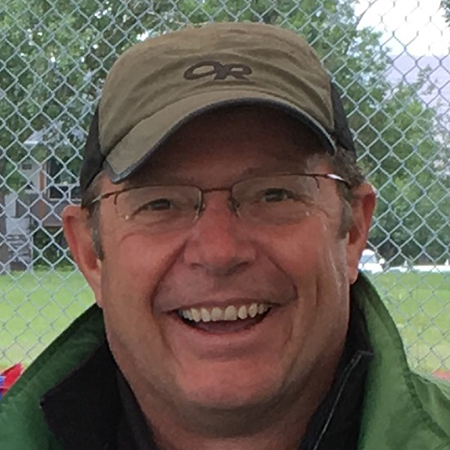
A Conversation with Kent Lewarne, Program Coordinator, South Central Eco Institute
1) Please tell us about your organization?
The South Central Eco Institute (the Institute) was formed soon after a Partners Forum in 2009 that brought together school representatives and other organizations, including three conservation districts, in south-central Manitoba. Forum participants expressed a strong interest in water quality in the Lake Winnipeg Basin.
The Institute’s primary focus is water-resource management, and our members include representatives from the academic community, local government, eco-environmental trades and agencies, and interested community members. Enbridge stepped up as a lead sponsor in 2010 and has been a strong, supportive partner ever since.
The Institute’s main goal is to affirm both the importance of water to our lives and the important role played by the experts who manage water resources. Another goal is to foster local ownership of water stewardship. In support of these goals, we link up schools with our regional conservation districts so that they can work together. Our primary educational initiative is the Enbridge Riverwatch Program, which to-date has seen hundreds of students track water-quality information from the Lake Winnipeg watershed.
Through Riverwatch, students work alongside conservation professionals to collect water samples using field-grade equipment and analyze the samples for various water-quality parameters—dissolved oxygen, conductivity, pH, water temperature, orthophosphates, etc. These data are then uploaded to the Institute’s website where, once approved, are publicly accessible. We now have in the range of 1,000 data sets; but, more importantly, each data set represents the students who have been in the field, learning about water quality in the Lake Winnipeg Basin.
2) How has the partnership with Enbridge advanced your programs/goals?
To put it bluntly, the Riverwatch program would not have been possible without the support of Enbridge. In our original grant application, we set out 10 primary goals and we’ve gone a long way to achieving all of them.
I’ll speak directly to our first goal, and that is we’ve improved our students’ awareness of both surface and ground-water resources, our sustainable use of water and the quality of the water supply. They’ve worked on high-level research projects, including phosphorus in a local lake, the suitability of a local reservoir for fishing and land management around sloughs. And because our students work closely with our conservation-district partners, our students are also learning about career options in water-related and environmental fields.
3) What are some of the highlights of the 2017 program, and why were they particularly successful?
One actually happened in early 2018, but I still consider it part of the 2017 program. The Institute was invited to participate in the International Water Institute's River Watch Forum held in Grand Forks, North Dakota. A contingent of 15 students and four teachers representing four Manitoba high schools attended the conference of 300+ like-minded students and teachers. Our attendees learned a lot, and we now have many new ideas we want work on with our Riverwatch groups.
Also in 2017, representatives of the Institute attended a roundtable hosted by the International Peace Garden, which is located adjacent to the International Peace Garden Border Crossing between North Dakota and Manitoba. Many like-minded organizations discussed the collaboration and direction of student watershed education in Canada and the U.S. It was an amazing discussion, which led the Institute to form a partnership with the Fort Whyte Alive nature centre and wildlife refuge in Winnipeg that is now offering the Riverwatch program inside the perimeter of Winnipeg.
And finally, I have to say that you cannot imagine the feeling when you’re out in the field with a group of students and seeing them realize they are part of a huge watershed! Many students arrive not even knowing the name of the river they’re studying, but they leave with a concept of the entire Lake Winnipeg watershed—from the Rocky Mountains in the west to the four U.S. states in the south and north to Hudson Bay. That’s why I love every minute of this job—seeing great teachers and great students not only sharing a memorable learning experience, but also gaining a greater understanding of their relationship with the environment and the importance of respecting and protecting our water resources.