Partnerships with Indigenous-owned businesses create opportunities to preserve history while building for the future
“We have an understanding of who we are and our relationship to the land,” said Val Bigboy, co-owner of B&W Services, an Indigenous-owned company that trains and hires Tribal monitors.
“It’s our job to educate other people about that and to show why these things are important to us.”
As construction continues on Enbridge’s Line 5 Wisconsin Segment Relocation Project, a unique partnership is helping ensure the region’s rich cultural history is protected every step of the way.
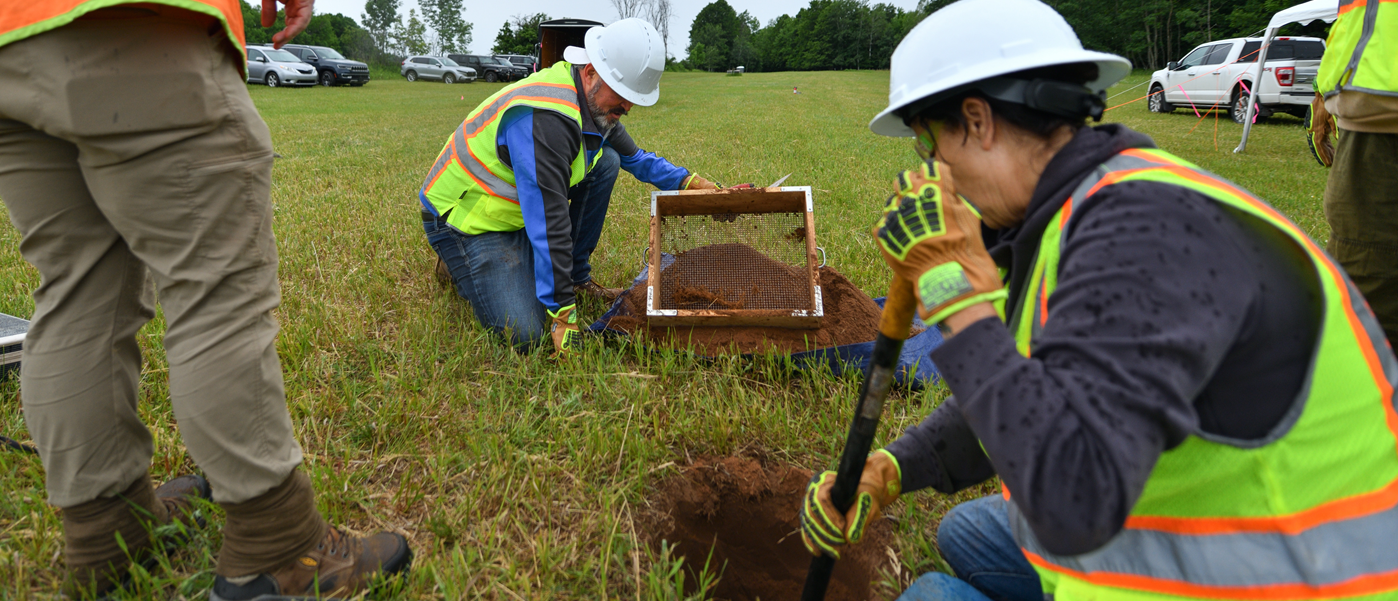
Since the project began, Enbridge has worked with Native American-owned businesses to provide Tribal monitoring during ground-disturbing construction activities. The effort helps protect culturally significant sites and gives Indigenous communities an active role in preserving the history and traditions connected to the land.
One of those partners is B&W Services, which operates the Niibowa Anijiiminan Archaeological Field School near Highbridge, WI. The program teaches archaeology and cultural surveying to Indigenous community members and prepares them to become certified Tribal monitors who can work on projects such as the Line 5 Wisconsin relocation.
The field school's impact can be seen daily on the Line 5 Wisconsin project, where trained Tribal monitors work alongside construction crews, keeping watch for items or locations that may hold cultural, historical or archaeological significance.
Cultural monitors are involved in the earliest stages of planning through project completion
“It’s important to us because it helps preserve Indigenous knowledge and protect culturally significant sites while ensuring Indigenous communities have a meaningful role in our projects,” said Taylor Whitebird-Salo, senior advisor for Tribal engagement at Enbridge.
The work requires a sharp eye and a deep understanding of the landscape.
“We train monitors to look at that landscape with that lens, to look at a cultural corridor or any unknown archaeological site that may be encountered,” said Jim Jones of Dirt Divers Cultural Resource Management, another Native American-owned business working on the project. “They are watching for ceramics, ancient pottery, lithic materials from stone tool making, animal bone, even historic resources.”
For Ed Wiggins, one of the field school’s trainers, the program’s success comes down to seeing former students put their training into practice on the Line 5 Wisconsin project.
“We have five teams of two out there working,” he said. “They’re doing their jobs very well.”
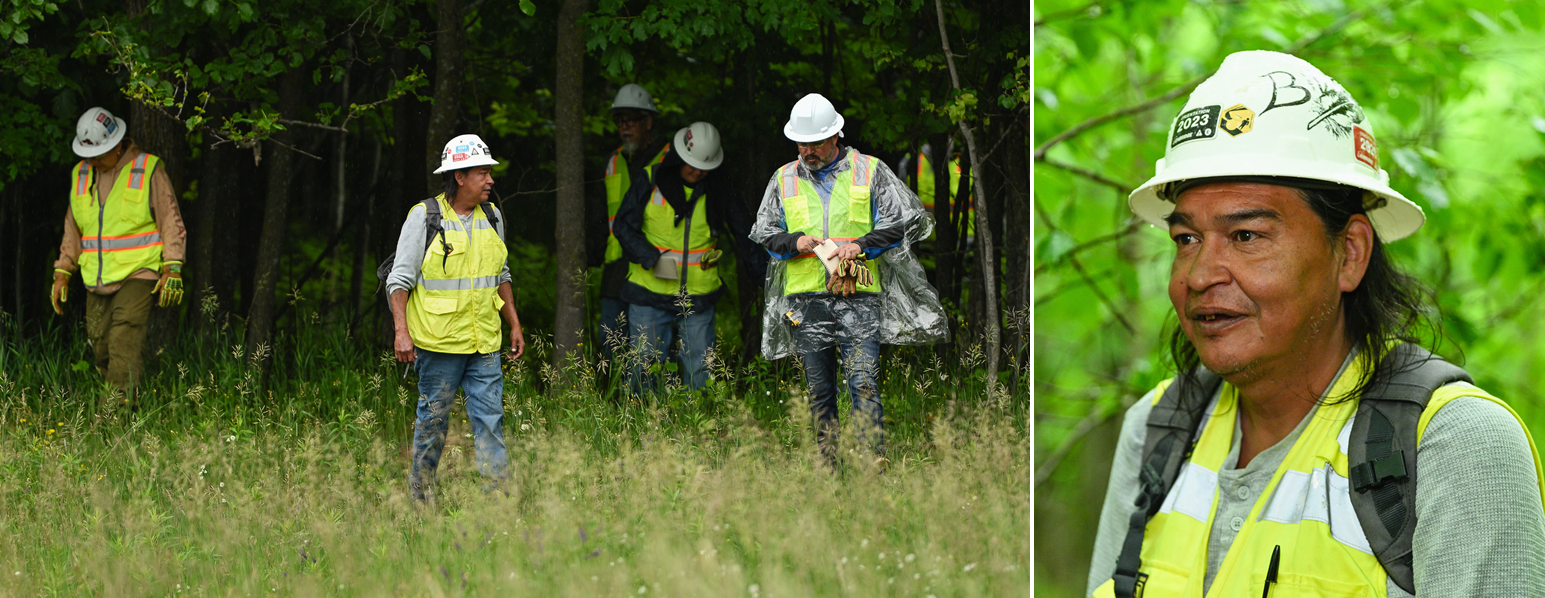 At left, Ed Wiggins leads group at Niibowa Anijiiminan Archaeological Field School; at right, Ed Wiggins trainer and co-owner of B&W Services.
That sense of pride extends beyond the construction site. The skills students gain through the field school create opportunities for meaningful employment while helping preserve cultural knowledge for future generations.
Bigboy shares that passion.
“We need trained eyes out there, and this is the point,” Bigboy said. “Our cultural resources are our natural resources, so this is important.”
Seeing graduates succeed in the field remains one of the most rewarding parts of the program.
“It makes me very proud to see our past students actually out in the field doing what I and the archaeologists have taught them,” Wiggins added.
The partnership has also helped build relationships between Tribal communities and project teams.
“I built trust with Enbridge,” Jones said. “I’m here to make sure that those resources are identified and protect what’s out here. So, we have a commitment together, working together to make sure that happens no matter what.”
As construction moves forward, cultural monitors continue to play a vital role in balancing progress with preservation, ensuring that important pieces of history are identified, respected and protected for generations to come.