Grazing sheep at Texas solar facility support safe, efficient and environmentally responsible operations
At Enbridge’s Orange Grove Solar facility near Corpus Christi, Texas, some of the hardest-working members of the vegetation management team don’t drive trucks or attend safety meetings.
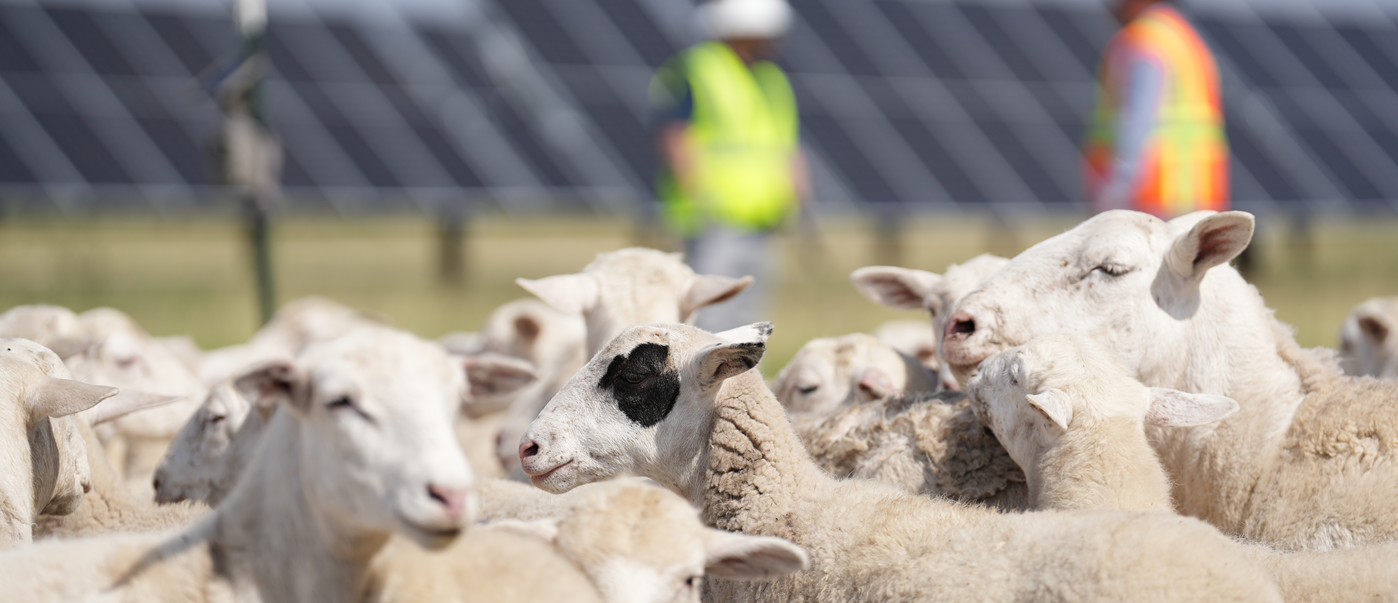
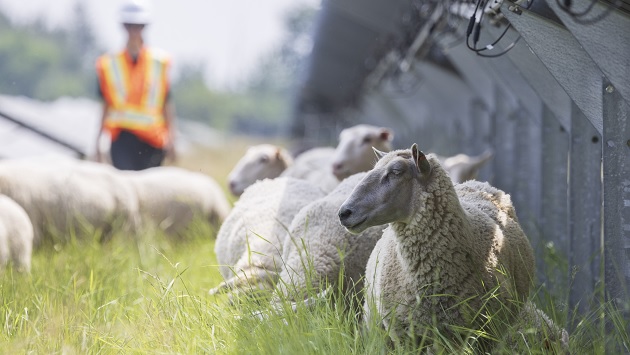
They’re 250 Dorper sheep, spending their days grazing beneath rows of solar panels.
The 130-megawatt facility, which entered service in 2025, is the third Enbridge solar site to use sheep grazing as part of its vegetation management strategy. Building on grazing programs at Sarnia Solar and Flanagan Solar, Orange Grove is exploring how livestock can support safe, efficient and environmentally responsible operations.
“After seeing the success of sheep grazers at other sites, we wondered if there was a way to incorporate similar practices at Orange Grove. Fortunately, a local shepherd was available, and the opportunity was there,” says Jason Loveless, Orange Grove’s site manager, regarding the motivations for adopting sheep grazing.
Before the sheep arrived last year, mowing crews cut vegetation across the site six or seven times. This year, despite wetter conditions associated with El Niño, the facility is moving toward fewer cutting cycles. As sheep can reduce reliance on mechanical mowing, they can also help lower operational risks around solar infrastructure, including potential rock throw and equipment mishaps, and may reduce maintenance requirements over time.
Loveless expects that expanding the grazing program could significantly reduce vegetation management costs while helping maintain safe, reliable operations.
But the benefits go beyond operations and maintenance.
Although Orange Grove’s sheep are free-range grazers, operators have observed stronger regrowth of desirable grasses and fewer invasive species in areas where grazing pressure is highest. Over time, that pattern can help create a more resilient plant community that requires less intervention while supporting healthier habitat conditions for wildlife and pollinators. It’s one example of how solar facilities can create value beyond energy generation alone.
“By helping manage vegetation beneath solar panels, the sheep are supporting safer operations, healthier landscapes and a growing vision for how renewable energy sites can be managed in the future,” says Loveless.
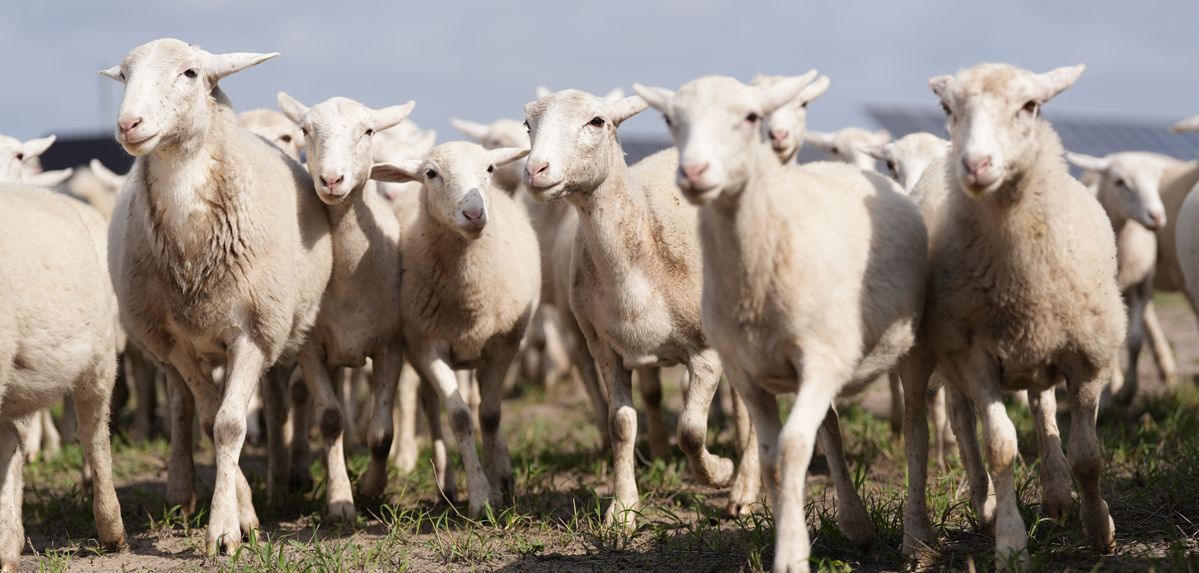 Let’s-a go! These 250 Dorper sheep can’t wait to get to work every day at Orange Grove Solar, near Corpus Christi, TX.
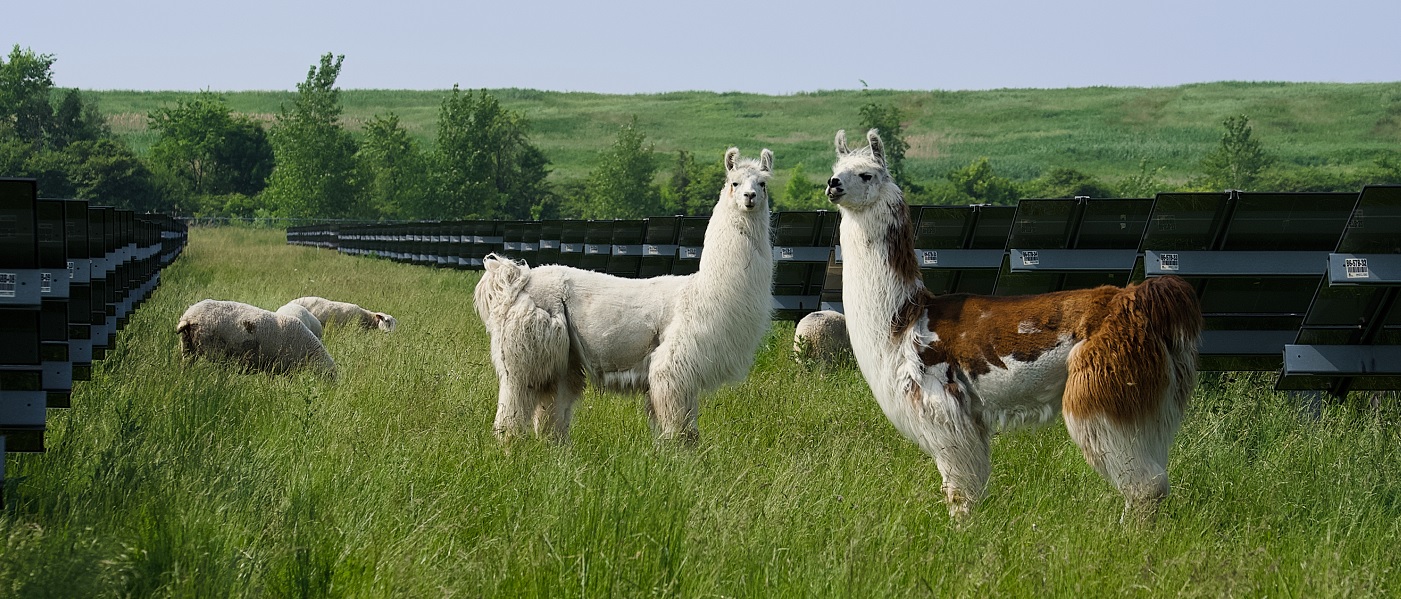
Interest in agrivoltaics, the practice of combining agricultural activities with solar energy production on the same land, continues to grow across North America, and Orange Grove is already serving as a real-world example of its potential.
Students from Texas A&M University recently visited the facility to learn how livestock grazing and renewable energy can work together in practice.
For the team at Orange Grove, the sheep are proving that innovation doesn't always require cutting-edge technology. Sometimes, one of the most effective solutions is also one of the oldest.
And while they may never answer an email or join a conference call, these four-legged creatures are showing that a little grazing can go a long way toward supporting both energy production and healthy landscapes.