



Solar energy harnesses the power to change in Nicaragua
The sunshine that parches the Chinandega region of Nicaragua has traditionally created hardship along with thirst. Now, it brings women who live in the region a completely unexpected gift – freedom.
Since 2002, Canadian charity Change for Children has operated the Nicaragua Water Project. With support from the energy4everyone Foundation, and others, the project provides solar technology to improve the quality of life for women and children in Nicaragua’s driest region.
Nicaragua is one of five countries where the energy4everyone Foundation, supported by Enbridge and its employees, works with partners to combat energy poverty. Access to affordable, reliable, and sustainable sources of energy has a positive impact on infant mortality, literacy and life expectancy in the developing world.
Traditionally, cooking and retrieving water has occupied the bulk of women’s time in this region of Nicaragua. The Nicaragua Water Project’s first priority was to address the scarcity of water resources by installing solar-powered wells to draw water from deep aquifers. A subsequent project saw the distribution of solar stoves in villages where women had traditionally cooked over open fires in their homes.
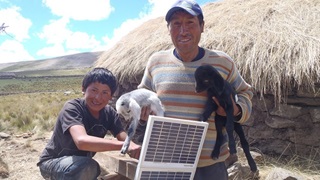
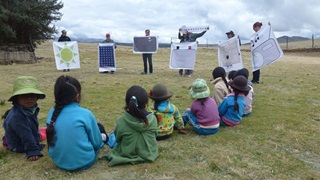
Lorraine Swift, executive director of the Edmonton-based Change for Children Association, says this simple solar technology is having a big impact in these communities. “One of the main objectives of the project is to provide women with more time for economically productive activities, more time with family, and more free time,” she says.
Young women who once spent their days gathering wood and waiting in well lineups for water now have time to continue with their studies. Adult women have time to get involved in community leadership.
“These stoves change the lives of these women,” says Swift. “They talk about how they put something on to cook for dinner at 3 p.m. and spend time helping the kids with their homework. Then dinner is miraculously ready at 5 or 6 p.m.”
Chris Meyer, acting executive director with energy4everyone, says the solar stoves mean women aren’t jeopardizing their respiratory health by cooking over an open fire inside their homes.
Stoves aren’t the only things we take for granted, adds Meyer. In North America, where energy shortages are the exception, it’s easy to forget billions of people around the world live with little or no electricity. “It’s amazing to talk with people who have received even a relatively small amount of energy through programs like this – and know what benefits that little bit of energy will bring them,” she says.
This kind of understanding has made the energy4everyone Foundation such a valuable partner for Change for Children, says Swift.
“Through its involvement, energy4everyone has helped us to prioritize alternative energy in our programming,” she says. “These projects benefit the community in so many ways.”