



Canada needs to ‘use all of our resources, smartly and sustainably’
Black gold and the blue flame are essential to unlocking a greener future, says the leader of Canada’s largest bank.
Earlier this week, Royal Bank of Canada CEO Dave McKay told an Edmonton Chamber of Commerce luncheon that building new pipelines, and accessing global energy markets, for Canada’s oil and gas industry is critical to supporting the move toward renewables.
“We can’t get to the economy of the future if we don’t use all of our resources, smartly and sustainably,” McKay said.
“Our ability in the decades ahead to finance innovation, to create technologies that will power the 21st century, and help transform the world to a cleaner economy, depends on our decisions today to get our natural resources to market,” he added.
As the world transitions to a lower-carbon future, it’s also expected that global energy demand will rise about 40 percent by the year 2040.
Enbridge recognizes that climate change is a global issue—and our overall business strategy, as well as our company climate policy, are guiding the transition of our energy systems to a lower-carbon future.

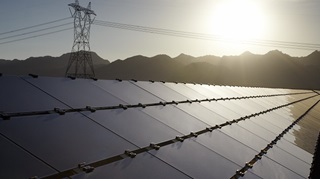
We aim to leverage all of our assets—renewable energy, natural gas and crude oil pipelines—to support this transition, while also helping to meet the world’s growing energy needs.
- We’re growing our natural gas business. This abundant, low-cost “bridge” energy source is a lower-carbon alternative for electricity generation, and it accelerates the growth of renewables by addressing intermittency issues;
- The financial strength of our pipeline operations allows us to continue growing our investments in lower-carbon energy infrastructure.
- We’re also adapting and harnessing new technologies that improve the safety and reliability of our pipelines, and advance environmental performance.
As Enbridge president and CEO Al Monaco puts it, Enbridge is a “microcosm of the energy future.”
“As a company with both pipelines and wind turbines, natural gas and emerging technologies, our role is to provide energy security and lower carbon energy,” says Mr. Monaco. “So it’s not a case of ‘either-or.’ It’s ‘all of the above.’
“Existing fuels will continue to play a crucial role in our economy for decades to come.”
According to the U.S. Energy Information Administration, U.S. crude oil imports from Canada rose 17 percent to 3.46 million barrels a day in mid-September, filling available pipelines to capacity.
“Canadians are polarized more than ever about oil and gas,” McKay told his Edmonton audience, “when we should be focused on how cleanly we can produce it, how safely we can transport it, and how wisely we can consume it.”