By Neil Sickich and Taysha KillsEnemy
(as published in the Ashland Daily Press)
There’s been a lot of misinformation floating around about a Wisconsin Counties Association agreement to help local governments pay for potential increased public safety costs that may occur because of Line 5 Relocation project construction. We’re here to set the record straight.
First off, we are both proud union members and have worked on pipeline projects—including Enbridge projects. We have seen firsthand the unsafe situations that some opponents of pipeline projects have put hardworking union members in. While we both support the Line 5 Relocation, we respect the right of others to oppose it and support peaceful expression of those views.
The agreement approved by the Ashland and Iron County boards and not approved by Bayfield County was proposed in response to concerns shared by residents, elected officials, and law enforcement about the increased costs of providing public safety services around the project’s construction. In response, the owners of Line 5—Enbridge—stepped up to offer to help local governments with these cost concerns.
The agreement itself establishes an independently managed fund to help local law enforcement cover increased public safety costs associated with the project. The agreement DOES NOT give Enbridge or the Wisconsin Counties Association any authority over law enforcement or how law enforcement responds to public safety issues. Rather, the agreement establishes an Enbridge funded reimbursement account, controlled not by Enbridge, but by an independent fund manager selected by the Wisconsin Counties Association—of which Bayfield, Ashland and Iron Counties are members.
Should law enforcement in these counties incur expenses related to the project’s construction, the counties would submit for reimbursement to the Wisconsin Counties Association, who then gives it to the independent fund manager for review and reimbursement. Enbridge has zero involvement outside of funding the reimbursement account—and certainly do not direct law enforcement.
It’s important to note, with or without this agreement and reimbursement account, law enforcement obligations remain the same. If a public safety issue arises, law enforcement must still respond and enforce the law. This agreement and reimbursement fund would simply allow for financial assistance should law enforcement expenses increase due to the project’s construction. If opponents of the project follow the law and remain peaceful, it’s likely this fund will be used minimally, if at all.
During the Line 3 pipeline construction in Minnesota a few years back, the Minnesota Public Utilities Commission REQUIRED Enbridge to provide a similar law enforcement reimbursement fund. In that case it was a good thing for local communities, as cases of Line 3 opponents chaining themselves to equipment, storming restricted private property such as pump stations, harassing union workers and significantly damaging the equipment of Veteran- and Tribal-owned small businesses, was not uncommon.
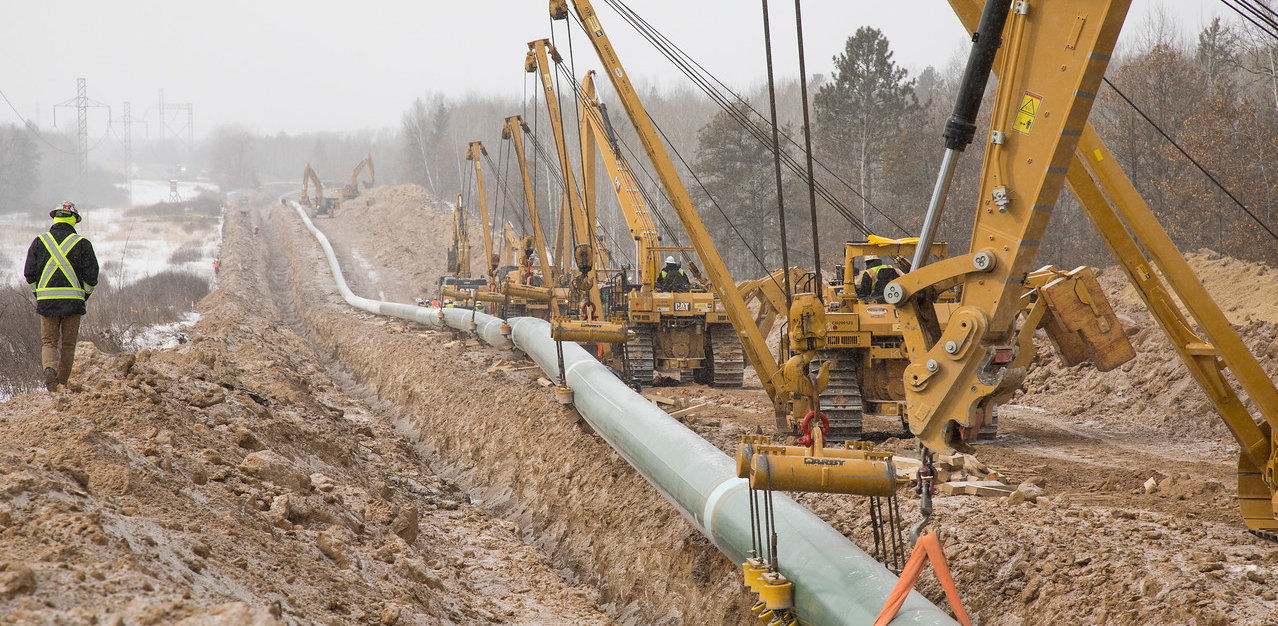
In the case of the Line 5 Relocation, Enbridge is voluntarily offering to reimburse local law enforcement to ensure if these tactics come to the Northwoods, taxpayers won’t be on the hook.
While opponents of the Line 5 Relocation are trying to stop these agreements in a classic case of “no good deed goes unpunished,” whether these agreements are approved or not, construction will move forward. As we stated, even if these agreements are not approved, law enforcement must still enforce the law. The question is simply who pays for it, Enbridge or taxpayers?
Enbridge is offering this reimbursement fund out of responsibility to the communities in the project area. They gain nothing from it. In fact, it costs them money.
Regardless of one’s views on the Line 5 Relocation, I hope we can all agree taxpayers shouldn’t be burdened with extra costs associated with public safety around the project.
About the authors
Neil Sickich is a lifelong Bayfield County resident and business agent for Wisconsin’s Steamfitters Local 601.
Taysha KillsEnemy is a member of the Laborers International Union of North America (LiUNA) Local 1091, Fond du Lac Band Member, and former pipeline protester.