It may sound hard to imagine today, but in the early 1950s, oil tankers once steamed across the Great Lakes—carrying millions of barrels of crude oil through one of North America’s most iconic freshwater systems.
For a brief but critical period, these inland seas did more than move iron ore and grain. They became a vital link in the continent’s growing energy network, ferrying Western Canadian oil from Superior, Wisconsin to refineries supplying eastern markets.
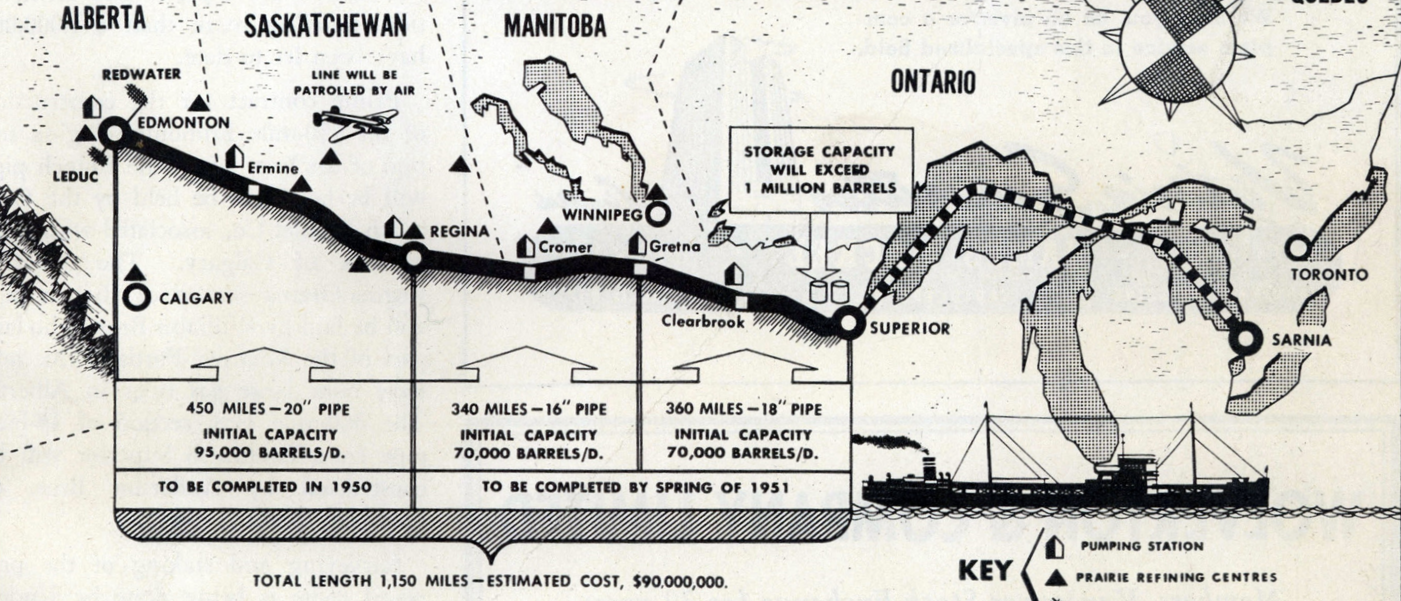
The story begins in 1950, when the newly formed Interprovincial Pipe Line Company built a pipeline connecting Edmonton, Alberta—near Canada’s oil fields—to its Lakehead Pipe Line Co. storage hub in Superior.
Crude oil was then transferred from storage tanks in Superior to tankers waiting at the port. From there, ships carried the cargo eastward through Lake Superior and beyond, navigating through the Soo Locks toward their final destination.
Millions of barrels on the move
The scale of this effort was remarkable.
In 1951, the first full year of operations, nearly 14 million barrels of oil were shipped across the Great Lakes via more than 160 tanker trips. By 1952, that number had surged past 20 million barrels as additional vessels joined the fleet.
Despite its success, the tanker system had clear drawbacks.
Shipping on the Great Lakes was seasonal. Each winter, ice forced the closure of the Soo Locks, shutting down traffic for months at a time. Oil shipments came to a halt, even as crude continued flowing into Superior by pipeline.
Building a continuous connection
Recognizing these challenges, planners moved swiftly to extend the pipeline eastward.
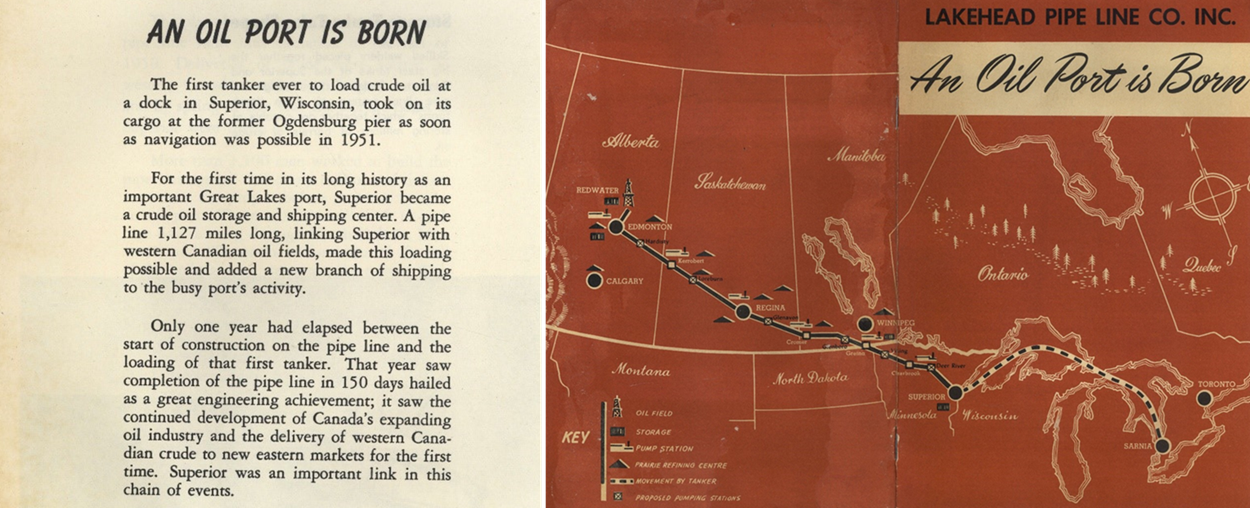
By 1952, construction was underway on a new segment stretching more than 600 miles from Superior through Wisconsin and Michigan, across the Straits of Mackinac, and into Ontario. The goal: create a continuous, reliable route linking Canada’s oil fields directly to eastern refineries. The connection was completed in 1953.
With the pipeline in place, oil shipments by tanker on the Great Lakes came to a swift end.
A new chapter in Wisconsin’s energy story
Today, after years of planning, discussion and preparation, construction on Enbridge’s Line 5 Wisconsin Segment Replacement Project is bringing a flurry of activity, new jobs and fresh energy to the region.
Local and Wisconsin-based contractors are playing a major role. Michels, a Brownsville, Wisconsin-based construction firm, is leading much of the work, alongside subcontractors from across the state and the Ashland area.
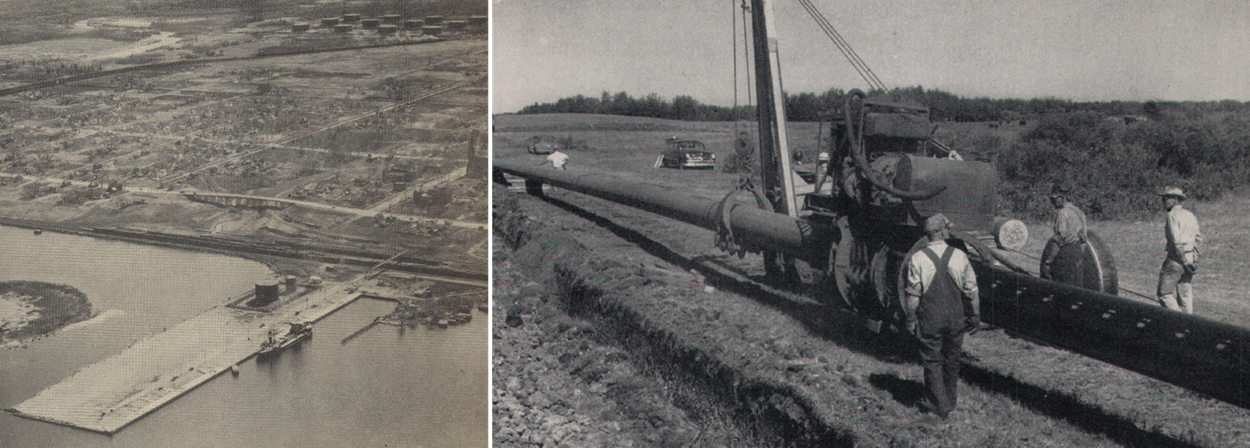 At left, pamphlet celebrates the opening of the Lakehead Crude Oil Dock in Superior, Wisconsin in 1951: “The former Ogdensburg pier has been converted to an oil loading dock which will accommodate the two largest freshwater tankers in the world.” At right, 1950s-era pipeline construction.
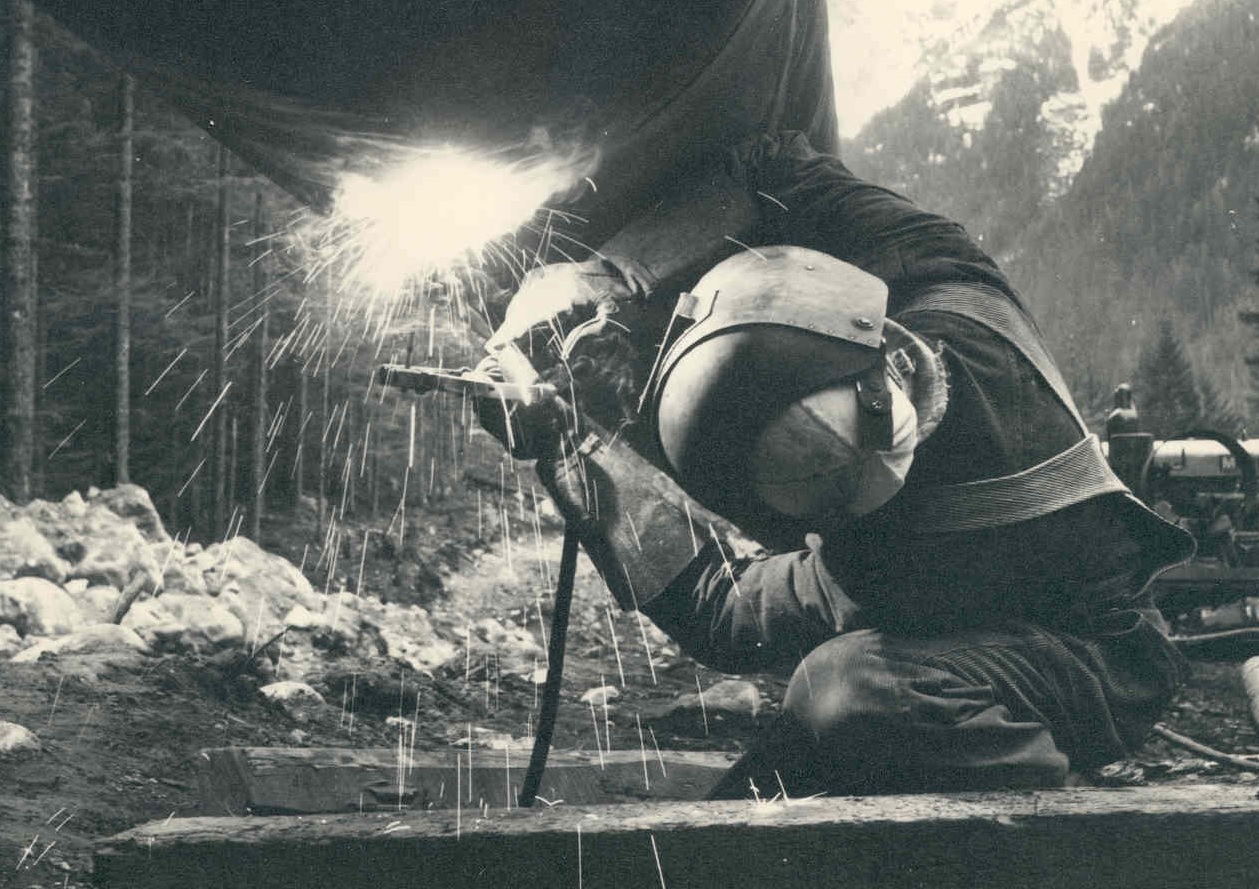
Fully permitted construction activities are well underway, creating hundreds of family-supporting union construction jobs in northern Wisconsin. Work is moving forward following permit conditions and mitigation plans that ensure any impacts are temporary, limited, and localized.
A lasting legacy
Today, Line 5 is critical energy infrastructure, serving 10 refineries and propane production facilities, and continues to operate safely and reliably delivering affordable energy to millions of consumers in the Midwest and Great Lakes regions.
From tanker ships on open water to pipelines, the evolution of oil transportation in the Great Lakes region reflects a constant search for safer, more reliable solutions.
While the tankers are gone, their story remains a powerful reminder of how Wisconsin continues to play a defining role in the evolution of safe and reliable energy transportation.
(TOP PHOTO: The route of Interprovincial Pipe Line Co.’s 1,150-mile line from Edmonton to the Great Lakes as published in December 1949 in The Monetary Times, which reported “during the seven-month open season, oil will be picked up by tanker for southwestern Ontario refineries.”)