How Target Hunger is helping families meet immediate needs while building a path toward stability.
A Houston father never imagined a routine medical procedure would change everything.
After complications from eye surgery began affecting his vision, he could no longer work. Without a steady income and his employer-sponsored health insurance, his family suddenly found themselves navigating circumstances they had never faced before.
When they turned to Target Hunger for food assistance, they found far more than groceries.
The family connected with one of Target Hunger’s community health workers, who helped them access healthcare resources and navigate programs they didn’t know were available. Eventually, the father received the treatment he needed, regained his vision and returned to work.
For Sandra Wicoff, CEO of Target Hunger, the family’s experience illustrates what the organization ultimately hopes to accomplish.
“Our vision is that people don’t need us,” said Wicoff. “The goal is to develop a model assistance program and help people on a path towards financial stability.”
For nearly 40 years, Target Hunger has served vulnerable communities in northeast and east Houston, working to alleviate hunger and its root causes through food assistance, navigation services and disaster relief.
Food fairs are one way that mission comes to life. Seven times each month, Target Hunger hosts drive-through distributions across its service area, with volunteers helping prepare and distribute fresh produce to families.
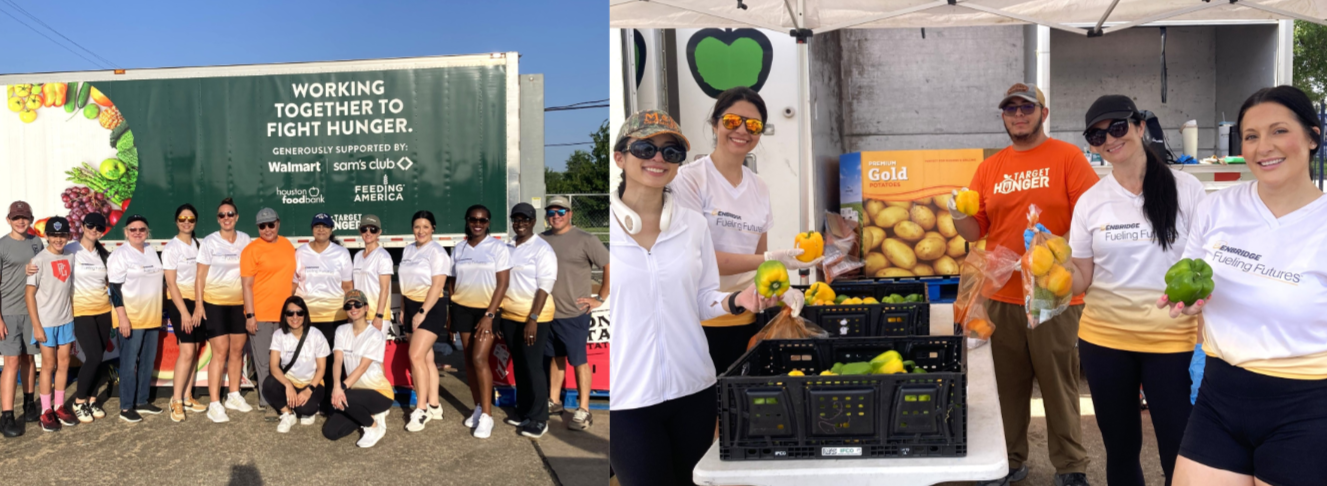
Enbridge employees have been among those volunteers. This July, the team contributed more than 150 volunteer hours across three food fairs, helping distribute more than 30,000 pounds of food and support 517 families.
Those efforts are part of an ongoing relationship that has also included food drives and financial support, helping Target Hunger provide nutritious food while connecting families with other resources.
But Target Hunger’s work extends beyond what goes into a family’s pantry.
A six-person navigation team of Texas-certified community health workers connects people with resources ranging from federal benefits and housing assistance to healthcare and job training.
“People often come to us during their most vulnerable moments,” said Carrie Grzelak, Target Hunger’s Director of Development. “The navigation team is very knowledgeable and caring, and they create a level of trust for clients to allow them to seek help for referrals to critical resources.”
That combination of immediate relief and longer-term support is becoming even more important as Target Hunger enters its next chapter.
Earlier this year, the organization reopened its expanded Houston campus, increasing refrigeration capacity for perishable food, including food rescued from local retailers. The campus also includes an on-site pantry, navigation offices and a new 3,500-square-foot education center with a 30-person classroom.
“The Education Center will allow Target Hunger to create a navigation-first assistance model front and center with food,” said Wicoff.
As Target Hunger responds to rising demand, flexible funding from supporters including Enbridge is helping the organization invest in its evolving service model, including expanded pantry hours, client services, retail food rescue efforts and on-site programming.
For Wicoff, Enbridge’s involvement is meaningful not because of any one contribution, but because employees continue to show up.
“There’s simply a presence,” she said. “They care very deeply about food insecurity. And the culture there is really about giving back to the community.”
Every family’s circumstances are different, but having somewhere to turn can make all the difference.