HDD construction continues across this Wisconsin project; proven method protects sensitive waterways, installs pipe deep underground
As construction progresses along the 41-mile Line 5 Wisconsin Segment Relocation Project, some of the most important work is happening out of sight—dozens of feet beneath rivers, streams, wetlands and roads.
The process is called Horizontal Directional Drilling (HDD), a specialized construction method used worldwide to install pipelines beneath environmentally sensitive areas without digging an open trench through them.
You’ve probably seen an HDD in your neighborhood running fiber, phone or electrical cables under roads, without impacting traffic or leaving the road in need of repair. Government agencies and engineers often prefer HDD for waterbody crossings because it allows pipelines to be installed deep underground while minimizing disturbance to wetlands, streambeds and shorelines.
The key ingredient? Mostly water and a little clay
A common question from residents is what exactly is used during HDD construction.
The answer is surprisingly simple.
The drilling process relies on a mixture made up of approximately 96 percent water and 4 percent bentonite clay. Bentonite is a naturally occurring, non-toxic clay formed from weathered volcanic ash.
During drilling, the clay-and-water mixture is pumped through the drill line and circulated back to the surface. The fluid helps lubricate and cool the drill bit, stabilize the underground borehole, carry soil and rock bits from the drill path, and reduce friction when the pipeline is pulled into place.
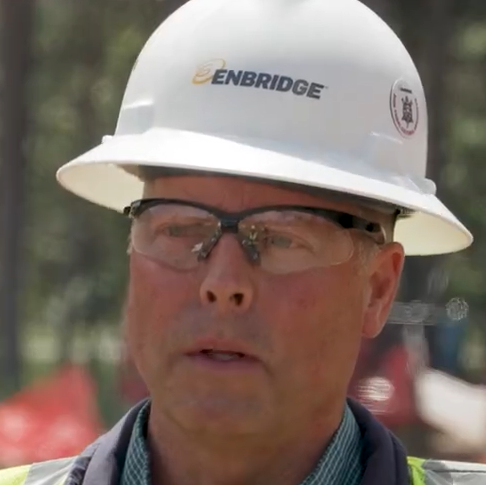
“People hear the term 'drilling mud' and sometimes imagine something complicated,” said Christopher Pope, Manager of Mainline Construction for Enbridge’s Line 5 Wisconsin Segment Relocation Project. “In reality, the primary ingredients are water and bentonite clay—materials that have been used safely in drilling applications for decades, including the construction of drinking water wells.”
Why bentonite clay?
Bentonite is a naturally occurring and non-toxic weathered volcanic ash clay. Bentonite's unique properties make it ideal for underground drilling. When mixed with water, it expands into a smooth, gel-like slurry that helps support the drilled pathway and transport excavated soil back to the surface.
Its use extends far beyond pipeline construction.
Bentonite clay is commonly used in drilling drinking water wells, and to amend poor garden or farm soils because it improves moisture retention, it’s even used in personal care and spa products.
What about additives?
In most HDD operations, the bentonite-and-water mixture is all that's needed.
When site-specific conditions require additional drilling performance, only additives approved by the Wisconsin Department of Natural Resources (DNR) can be used.
The DNR maintains a formal review and approval process for HDD products through its Previously Reviewed/Approved Drilling Products List, which identifies approved products, manufacturers, ingredients, intended uses and any applicable restrictions.
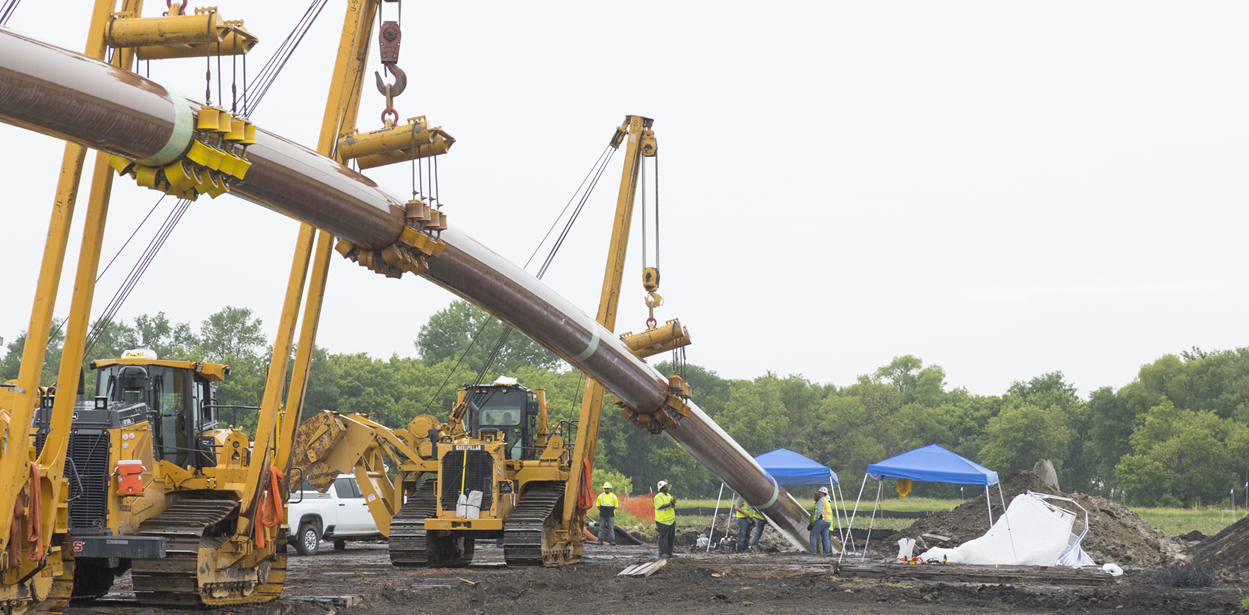 Horizontal Directional Drilling (HDD) is preferred for waterbody crossings because it allows pipelines to be installed deep underground while minimizing disturbance to wetlands, streambeds and shorelines.
“Environmental protection is built into every aspect of this work,” said Pope. “The DNR permit for the project requires that any additives must meet Wisconsin’s regulatory requirements. If an additive is needed, that additive has already been approved by DNR for HDD use.”
Why HDD is commonly used for waterbody crossings
Traditional pipeline construction methods can require excavation through a waterbody or wetland. HDD avoids that surface disturbance by drilling a pilot hole deep beneath the feature and then pulling the pipeline through the completed bore.
The result is a crossing method that offers several environmental advantages:
- Reduced disturbance to aquatic habitat
- Protection of riverbeds and streambanks
- Minimized impacts to water quality
- Less disruption to wetlands and vegetation
- Reduced erosion and sedimentation risks
For communities along the Line 5 route, HDD represents one of the most carefully engineered components of the project.
"The primary ingredients are water and bentonite clay—materials that have been used safely in drilling applications for decades, including the construction of drinking water wells."
Chris Pope
Manager of Mainline Construction,
Line 5 Wisconsin Segment Relocation Project,
on the drilling mud used in HDD applications
“HDD is a proven technology that allows us to cross sensitive areas while significantly reducing environmental disturbance at the surface,” said Pope. “It's one of the reasons this method is widely used across North America for major infrastructure projects.”
What happens if the water-and-clay mixture is released?
The drilling process is closely monitored by experienced professionals at all times. If a drop in pressure occurs, drilling stops until corrective actions are completed. If a release of the clay and water mixture occurs, Enbridge follows DNR-approved response plans to make sure the release is minimized and equipment is staged nearby to quickly respond and clean up the landscape.
Work continues along the route
HDD activities are continuing at locations throughout the 41-mile Wisconsin Segment Relocation Project as crews advance construction of the new pipeline route.
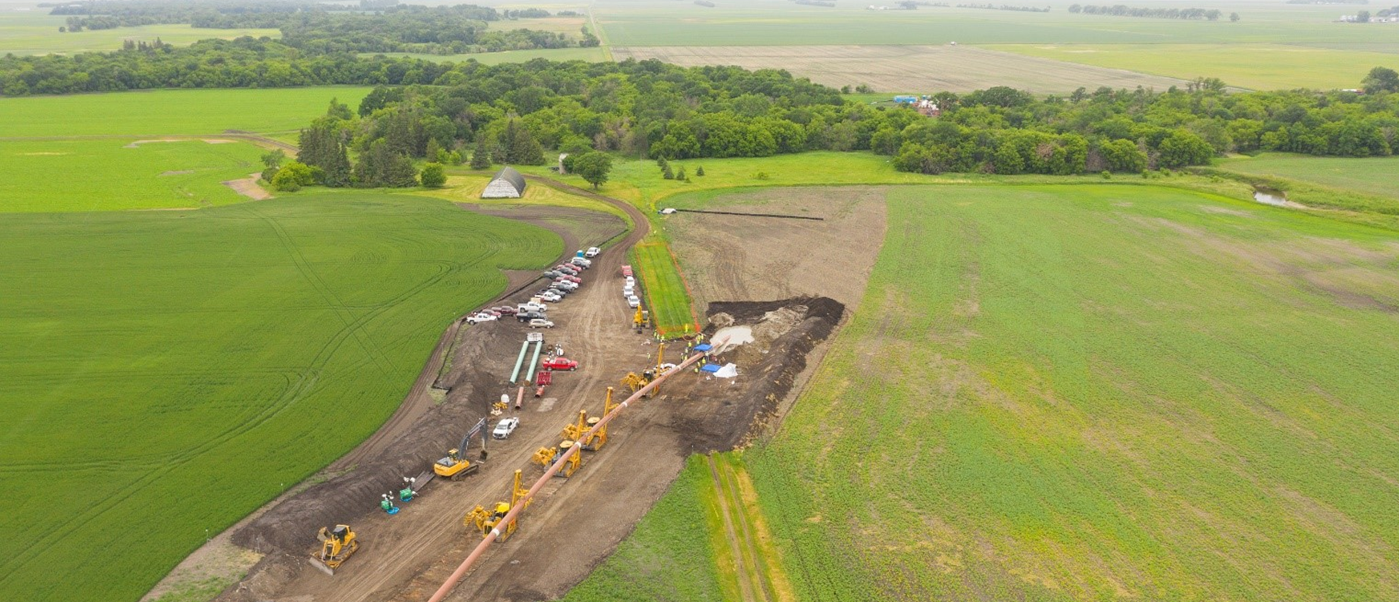
(TOP PHOTO: An example of typical Horizontal Directional Drilling (HDD) construction.)