



L3RP hearings wrap up in Calgary
Canada’s First Nations and Métis communities have a special connection to the land, and Enbridge is committed to working with these groups on environmental protection issues, the National Energy Board heard Monday as the Line 3 Replacement Program hearing wrapped up in Calgary.
Over the past two years, we’ve met with more than 150 Aboriginal groups and communities in advance of NEB project hearings on the Line 3 Replacement Program—discussing land-use and environmental protection issues, as well as economic benefits.
Enbridge’s L3RP environmental and socio-economic assessment includes Aboriginal traditional knowledge we’ve acquired through that extensive Aboriginal engagement program, as well as our nearly 70-year history of building and operating pipelines along the pipeline route, Don Davies, Enbridge’s legal counsel, told the NEB during Monday’s oral final arguments.
Enbridge’s engagement with Aboriginal groups on environmental protection issues “will carry on throughout each phase in the lifecycle of the project,” said Davies, who pointed to testimony by Solomon Cyr of the George Gordon First Nation, near Punnichy, Saskatchewan, who described a traditional knowledge and land-use study, funded by Enbridge, as a legacy for his people.
“Why is Enbridge funding a number of these studies? Not because they are required for the environmental assessment, but because they provide a benefit to the Aboriginal groups that do them,” said Davies. “It’s part of the engagement.”
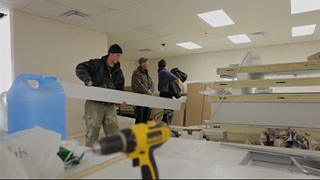
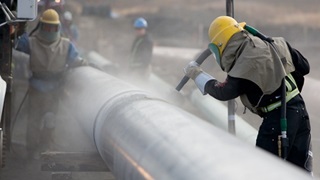
Davies pointed out during Enbridge’s final argument that the L3RP is a maintenance project, with the majority of the existing line from Hardisty, Alberta to Superior, Wisconsin to be replaced with new pipe, using the latest available high-strength steel and coating technology, that enhances safety and reliability.
The L3RP will also provide economic benefits for First Nations and Métis groups, as part of Enbridge’s commitment to supporting employment and business opportunities for Aboriginal communities near the project corridor.
“These are not just words on a policy document,” said Davies, who offered the following proof points:
- Aboriginal employment participation varied from 10 to more than 30 percent on Enbridge’s Alberta Clipper pipeline project in 2008 and 2009;
- Enbridge spent more than $52 million in 2014 on goods and services from Aboriginal businesses and suppliers;
- Enbridge’s commitment to providing sustainable benefits via L3RP through employment training programs, sponsorship of reverse trade shows, employment and contracting opportunities, engagement agreements, and support for school programs.
The L3RP initiative will have broader economic benefit for Canadians during the construction phase, including:
- Direct project expenditures of more than $4.3 billion, creating direct contracting and employment opportunities and economic spinoffs for local businesses;
- Provincial and federal tax revenue of more than $500 million.
“This is why the (NEB) has received numerous letters of support for the project from various municipalities, chambers of commerce, and construction, labor and manufacturing associations,” said Davies.
Testimony from the L3RP hearings can be found on the NEB’s website.