



Years in the making: Campbells Creek restoration brings hope for brook trout
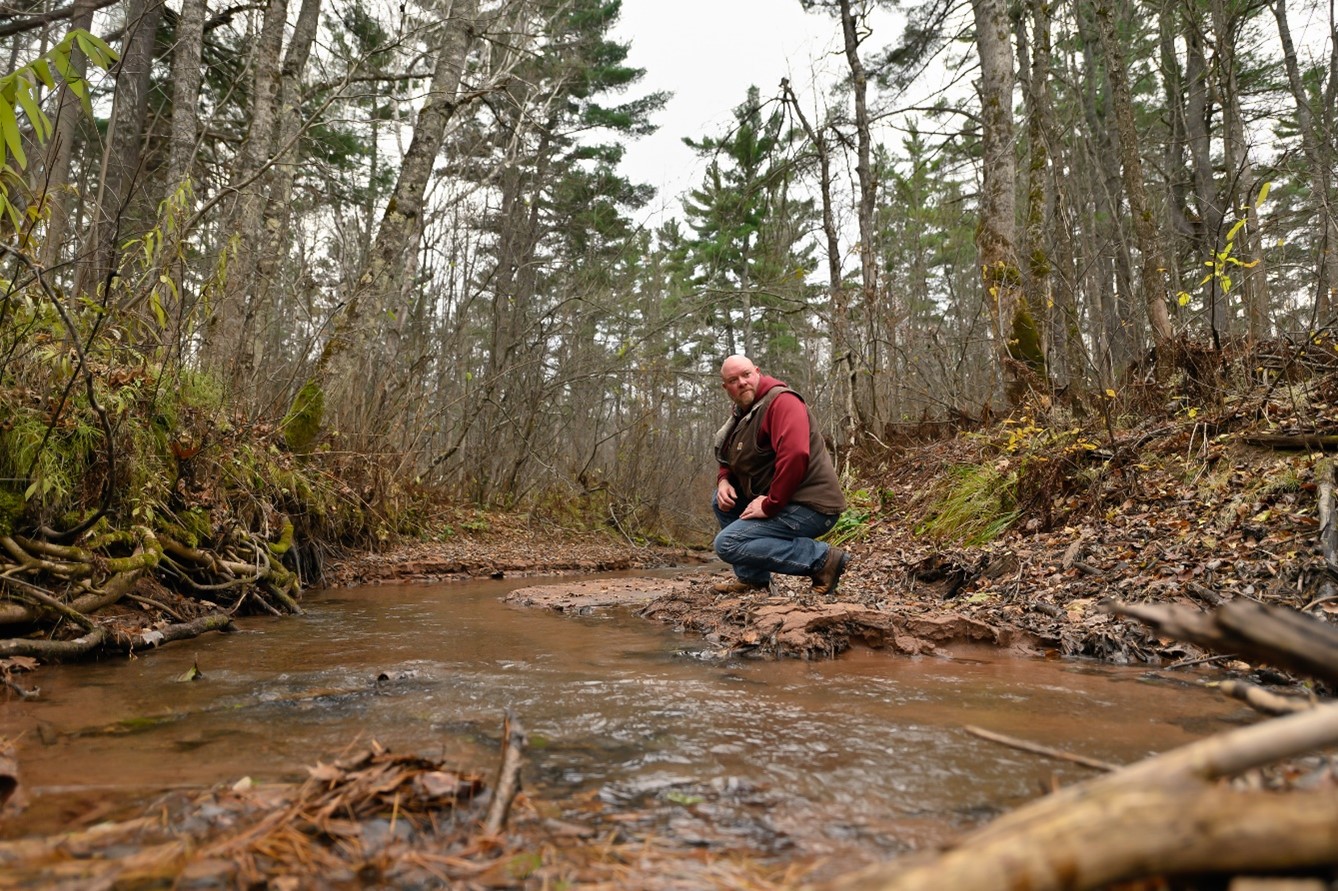 Bayfield County conservationist Ben Dufford kneels by Campbells Creek.
Enbridge Ecofootprint grant supports Cranberry River Fish Passage Project
Jan. 16, 2026
On a crisp fall day in northern Bayfield County, the sound of rushing water tells a story of renewal. Campbells Creek—a quiet tributary of the Cranberry River—now flows freely through a brand-new culvert, opening the door for brook trout to return to their historic spawning grounds.
This transformation didn’t happen overnight. In November 2023, the Bayfield County Land and Water Conservation Department, working alongside the Town of Clover and the Wisconsin Department of Natural Resources (DNR), secured a $100,000 Enbridge Ecofootprint grant to tackle a longstanding problem—a failing culvert that blocked fish passage and posed safety risks for emergency vehicles.
“The old culvert was too narrow and too steep,” explains Ben Dufford, a conservationist with Bayfield County. “It had been deteriorating for years. Not only was it a barrier for trout, but the town was worried about what would happen if an ambulance needed to cross during a storm.”
The new structure is a game-changer. Engineered to handle a 100-year rain event, the culvert more than doubles the capacity of the old one, slowing water flow and reducing sediment runoff. Inside, crews placed two truckloads of rock to create resting spots for migrating brook trout—a small detail with big ecological impact.
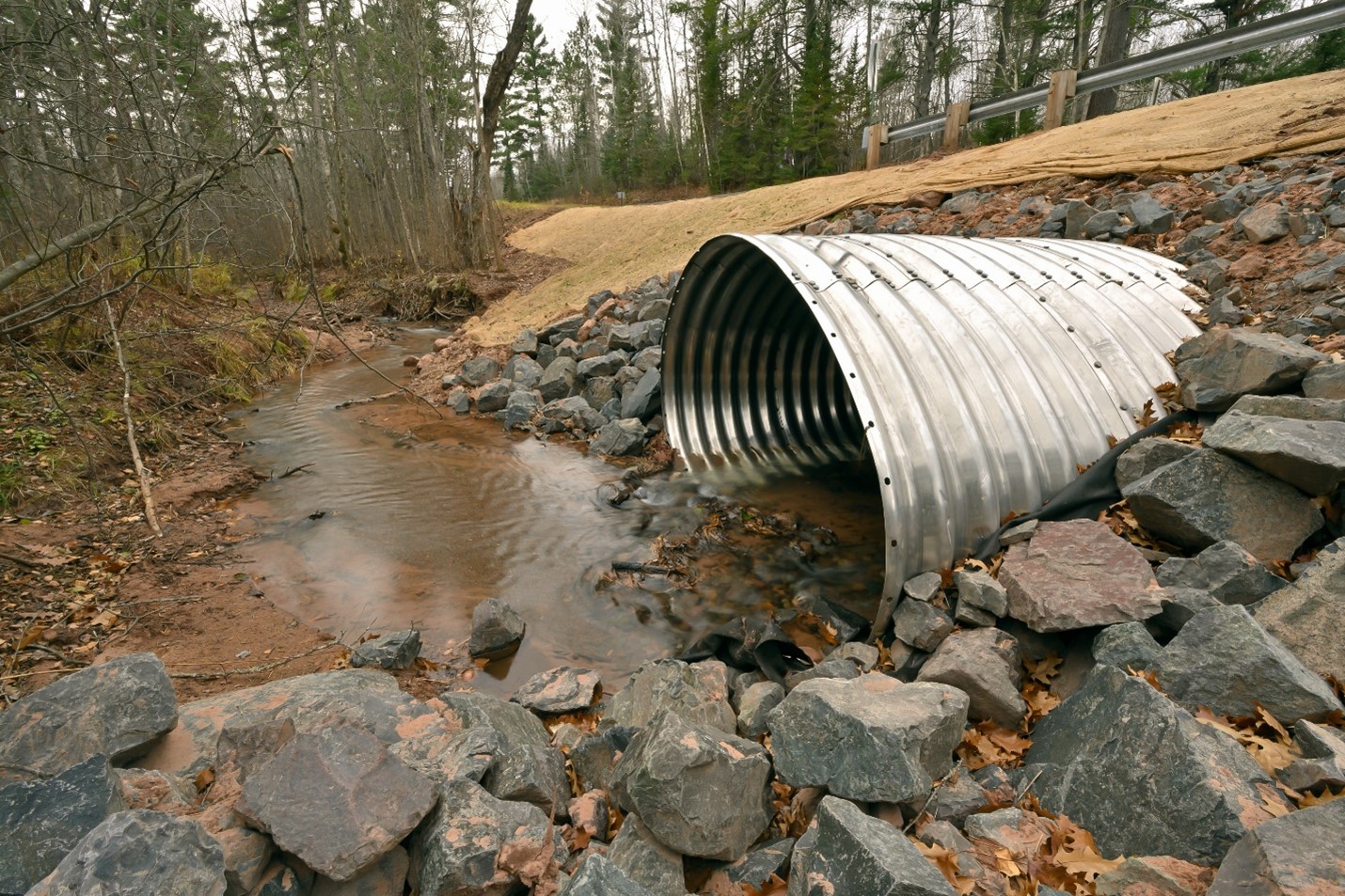 Completed culvert project on tributary of Cranberry River.
“When the DNR surveys this area in the future, we’re hoping to see a lot more brook trout upstream than we’ve seen in previous years,” Dufford says with a smile. “That will tell us what we did here is working.”
The project was made possible through partnerships and funding from Enbridge’s Ecofootprint program—a two-year, $500,000 initiative launched in 2023 to support environmental projects along the Line 5 Wisconsin Segment Relocation Project. From improving water quality to protecting threatened species, the program aims to strengthen stewardship across northern Wisconsin.
“Building a structure like this takes time, energy and money,” Dufford notes. “Without the Ecofootprint grant and support from state and federal fish passage programs, this wouldn’t have happened. Partnerships make conservation possible.”
Standing at the site, Dufford reflects on the years of planning and collaboration that led to this moment. “It feels like a job well done—and a win for the Cranberry River system.”
For anglers and conservationists alike, Campbells Creek’s story is one of persistence, partnership, and hope for the future of Wisconsin’s cold-water fisheries.