



The new year ushers in Year of the Tunnel
Enbridge’s Great Lakes Tunnel and dozens of projects planned, underway throughout the U.S. and globally
Jan. 21, 2026
“Dynamic . . . and collective breakthroughs through teamwork” describe 2026 in relation to the Year of the Horse under the Chinese zodiac.
This year can also be called the Year of the Tunnel.
Tunnel Business Magazine and related industry publications point to a robust U.S. tunnel outlook for 2026, driven by significant infrastructure investment with continued focus on technological advancements and engineering feats.
Additionally, more than 500 of the world’s leading tunneling and underground infrastructure experts convened Jan. 6 at the George A. Fox Conference in New York City to exchange insights and present updates on a series of tunnel projects in the U.S. and across the globe.
Key themes for 2026:
- Technological advancements: Innovations in tunnel-boring machines (TBMs) and methods are increasing in use due to their capability and efficiency.
- Strong investment: Federal, state—and in the case of Michigan’s Great Lakes Tunnel—private funding spurs large-scale projects, boosting tunneling activity.
- Economic context: While overall transportation construction grows, tunnels and bridges are expected to remain strong and other specific segments could see mixed results, notes the American Road and Transportation Builders Association (ARTBA).
- Major project momentum: Projects like the Frederick Douglass Tunnel (Baltimore) and the Second Avenue Subway are progressing, with construction expected to ramp up in 2026.
“We are moving forward with the Great Lakes Tunnel Project as planned,” said Paul Meneghini, community engagement manager at Enbridge.
“Our Tunnel Project embodies how tunnels have delivered solutions across industries for centuries. We will leverage proven, safe and reliable technology along with experience gleaned over decades to meet the diverse and growing needs of our region.”
Enbridge’s Great Lakes Tunnel Project
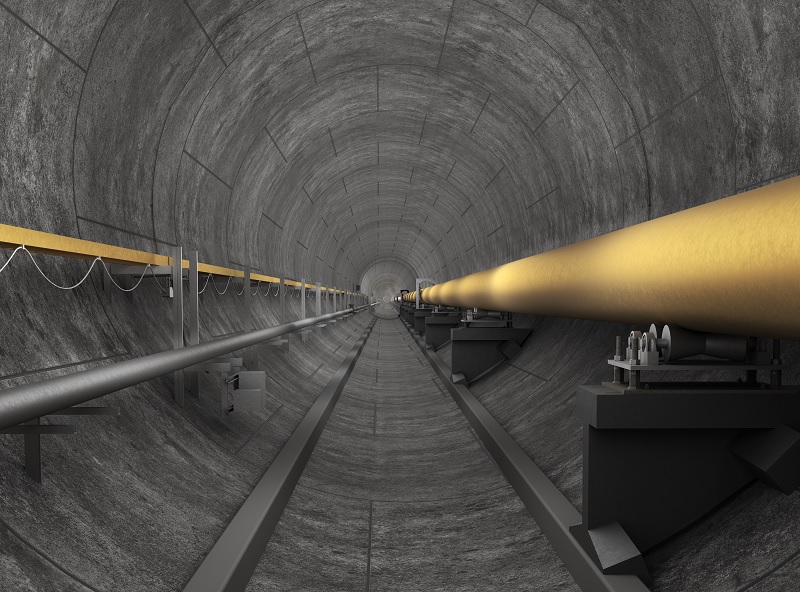
Placed under the lakebed of the Straits of Mackinac, the Great Lakes Tunnel will be a 21-foot-wide concrete tunnel. It will house Line 5 and allow room for other utilities, according to Enbridge’s plans.
The Great Lakes Tunnel is a solution on multiple levels.
Some Michiganders were concerned about the dual oil pipelines in the Straits of Mackinac yet wanted and needed the energy provided by Line 5. The Great Lakes Tunnel accomplishes both things: placing the pipeline in a tunnel well below the lakebed where it can continue to be monitored 24/7, protecting the environment and reducing the chance of a release to nearly zero, while also keeping energy flowing to Michiganders who rely on propane to heat their homes and helping to ensure the state and region have the raw products to make more than 6,000 items, including . eyeglasses, medicines, jet fuel, and recreational products like kayaks.
“The Great Lakes Tunnel represents the intersection of science and innovation to create wins across the board,” said Meneghini.
Enbridge anticipates receiving a final federal permit from the U.S. Army Corps of Engineers to build the tunnel in the first half of 2026.
Dozens of other tunnel projects across the U.S. are in the early planning stages or under construction.
- Hudson Tunnel (New Jersey/NYC): Under the Gateway program, two customized tunnel-boring machines are slated to arrive in New Jersey this January in preparation for beginning springtime construction of a rail tunnel to replace the 100-year-old tunnel that serves Amtrak and New Jersey Transit, linking New Jersey and Manhattan.
- Northeast Ohio Regional Sewer District (Cleveland): A major program building tunnels to manage stormwater and sewer overflow.
- Howard Street Tunnel (Baltimore): Expanding clearance to allow larger freight containers, boosting port capacity.
- Hampton Roads Bridge Tunnel Expansion (Virginia): A new tunnel under the Chesapeake Bay Bridge, similar to the Great Lakes Tunnel Project.
While Mary, the TBM for the Chesapeake Bay Bridge Tunnel, neared the end of its round-trip beneath Hampton Roads Harbor in May, Chessie finished its assigned task.
The approximately 300-foot Chessie TBM drilled more than 6,300 feet for the parallel tunnel of the Chesapeake Bay Bridge at Thimble Shoal Channel.
More than four million people annually use the approximately 25-mile connection between Virginia’s mainland and Eastern Shore.
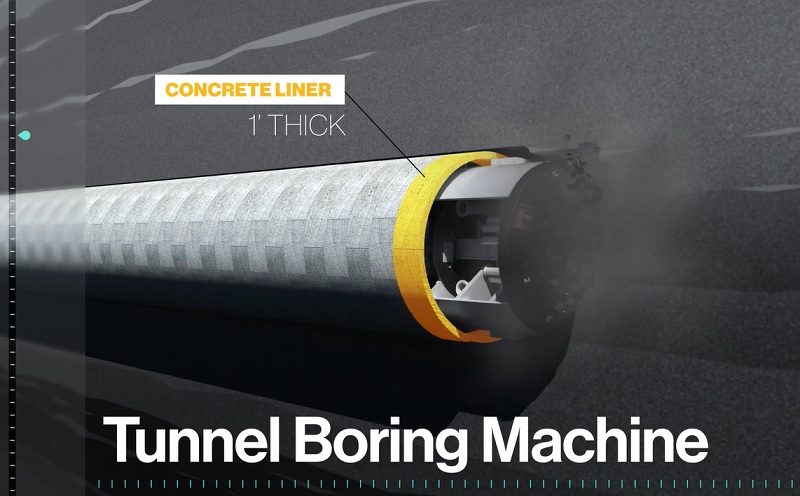
“Chessie is a wonderful example of the proficiency and precision of TBMs and is most similar to what we will use to build the Great Lakes Tunnel,” said Meneghini.

“These tunnel projects are transformational. Applying today’s technology and skills will improve travel, reduce impacts of water overflow and transport the energy on which we rely for fuel, healthcare, business, entertainment, and many other aspects of daily life.”
—Paul Meneghini, Enbridge manager of community engagement in Michigan
Safety is a top focus
Meneghini also shared that housing Line 5 in a tunnel removes the risk of a ship’s anchor striking the pipeline.
“We are engaged with world-renowned tunneling, safety and environmental experts, as well as area Labor to build this tunnel,” said Meneghini.
“As part of the planning and permitting process for the Tunnel, we have dedicated since 2019 more than 40,000 hours to conducting environmental surveys in the Straits.
“Our team has accomplished a lot over the last several years to bring this Tunnel to fruition, though we still have work to do. We look forward to the collaboration, teamwork, skills and passion that will make Michigan’s tunnel a reality. We’re ready to build.”
Find out additional information on the Great Lakes Tunnel.
Additional information on other tunnel projects may be found through these resources:
- Tunnel Business Magazine: Provides regular U.S. tunnel outlooks and project updates.
- TUC Magazine (Tunneling and Underground Construction): Industry news and list highlighting key projects.