



Pipelines play a prominent role in your health care
You may not know it, but patients rely on Line 5 for variety of care
As Michigan intensifies efforts to battle its recent uptick in COVID cases—a potential fourth wave—it simultaneously tries to derail a primary source essential to combatting the virus.
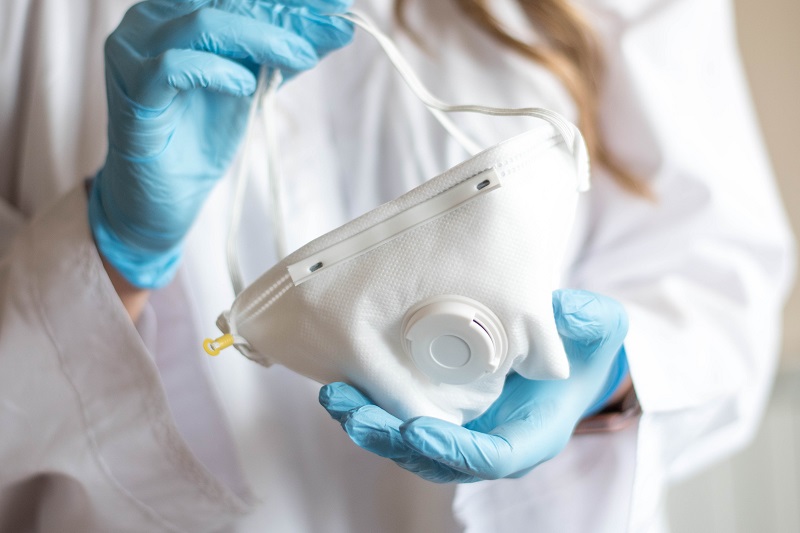
Disposable gloves, face shields and now the vaccines to guard against the spread of COVID have dominated the news, social media and even conversations among families and friends. Manufacture of these items depends on light crude oil and natural gas liquids, exactly the product transported through Enbridge Line 5 for which the State is trying to revoke a longstanding easement agreement to force the pipeline’s shutdown.
In addition to the protective equipment, oxygen masks, ventilator tubing, and antibiotics, the products that Line 5 transports is critical to the manufacture of analgesics and antihistamines common to curbing a host of allergies and other ailments. The same goes for sunglasses, sunscreen and ointments. Why would anyone want to shut down a safe and reliable pipeline?
‘A prominent role in promoting good health’
“Oil and natural gas and their derivatives have a prominent role within medicine overall, including proactive health and safety,” said Hilda Wist, the nurse practitioner at Enbridge. “You don’t stop to think about it until you don’t have access to aspirin, inhalers, bandages, heart monitors, stethoscopes, or the other necessary equipment and medicines that either save your life or play a prominent role in promoting good health.”
Ambulances and medical helicopters also depend on Line 5. Product transported through Line 5 helps in their manufacture, as well as the transportation fuel that keeps them on the road or in the air. Additionally, hospitals often rely on diesel from Line 5 to power back-up generators when a storm or other emergency disrupts the power supply.
Line 5 has operated safely for more than 65 years. The heavy steel that forms the pipeline varies greatly from the bamboo pipelines used thousands of years ago and setting the stage for technological advancements that increased the ability to transport light crude oil and natural gas liquids safely.
Those technological advancements are inherent to Enbridge’s Great Lakes Tunnel Project. In a tunnel bored below the lakebed in the Straits, Enbridge plans to house a replacement section of Line 5. By placing Line 5 within the tunnel, Enbridge is eliminating the chance of an anchor strike to Line 5 and virtually eliminating the chance of a spill from Line 5 in the Straits.
Great Lakes Tunnel: ‘Our next technological advancement’
“Similar to the healthcare industry, people rely on us,” said Mike Moeller, director of Enbridge’s Great Lakes region “which is why we are committed to the new technologies that allow us to conduct business safely. Whether it’s for the propane that heats their homes, the medicines that help them or the vehicles that transport them, they depend on Line 5, and the Great Lakes Tunnel is our next technological advancement. The engineering marvel will increase safeguards in the Straits. Equally importantly, it will enable hospitals, physicians and all first responders who continue to rely on Line 5 to provide the vital resources they need to treat their patients.”
PHMSA: Line 5 continues to operate safely
Despite the benefits of Line 5 to residents and businesses within a five-state region and that the U.S. Department of Transportation Pipeline Hazardous Materials Administration (PHMSA) oversees interstate pipeline safety, the State issued a Notice in November 2020 signaling its intent to shutdown Line 5 this May 12.
“As recently as January, PHMSA reiterated that Line 5 continues to operate safely,” said Moeller. “Yet, the State continues to try to shut down a critical piece of safe infrastructure on which millions of people in the region depend on.”
The matter is in the hands of the Federal court. The State and Enbridge also are working with a mediator to try to resolve the issue.