

About this report


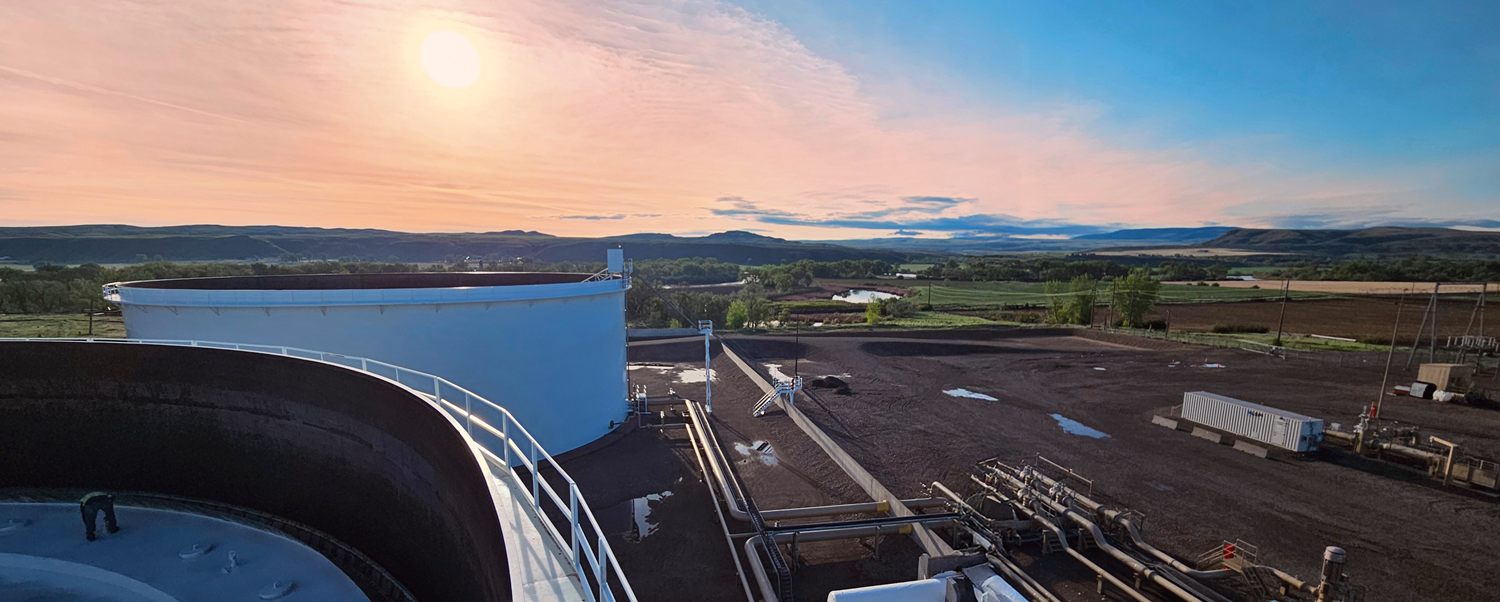
White tank at sunrise 

This report, and our suite of related publications (2025 Datasheet; 2026 Management Information Circular; 2025 Annual Report; 2025 Indigenous Reconciliation Action Plan Refresh; Fighting against forced labour and child labour in supply chains) represent Enbridge’s ongoing focus on transparency and the disclosure of sustainability-related activities and performance relevant to our business and stakeholders. We demonstrate accountability by engaging with our stakeholders, addressing material1 topics and aiming to provide a balanced view of our performance. For further information on how we manage key topics, we have included links to our Management Approach documents—which are reviewed and updated annually—on the relevant pages of this report. Supplementary reporting on topics of interest can be found here.


Reporting boundaries

The scope of this report includes Enbridge Inc., its wholly owned subsidiaries, and joint ventures which it operates, unless otherwise noted.

This report focuses on performance and activities from Jan. 1 to Dec. 31, 2025, and significant events early in 2026.

For details on our reporting methodology, see page 20 of the 2025 Datasheet. Data exclusions or additions are noted throughout the report.

Reporting standards

We have enhanced and expanded our sustainability reporting practices over the past 25 years and we work to maintain pace with reporting guidance and frameworks as they evolve.

The following reporting standards have informed our approach to reporting: Global Reporting Initiative (GRI) Universal Standards and GRI 11: Oil and Gas Sector Standard; Sustainability Accounting Standards Board (SASB) standards for Oil and Gas Midstream and Gas Utilities and Distributors; Task Force on Climate-related Financial Disclosures (TCFD); International Petroleum Industry Environmental Conservation Association (IPIECA) Sustainability reporting guidance for the oil and gas industry; UN Sustainable Development Goals; and the UN Global Compact. See page 80 for more.

Assurance

As part of our focus on standardizing our reporting methodology, we engage an independent third party to provide limited assurance on key performance indicators tied to select material1 topics, including workforce metrics, Scope 1 greenhouse gas (GHG) emissions, Scope 2 GHG emissions, select Scope 3 GHG emissions categories, total energy consumption (fuel and electricity), methane emissions and GHG emissions intensity. See page 23 of our 2025 Datasheet for the complete assurance statement.


1 References to the terms “material,” “materiality assessments” and similar terms throughout this report are used specifically to identify the sustainability topics of greatest importance to our stakeholders and do not correspond to the concept of materiality under Canadian or U.S. securities laws.


How we look at ‘energy transition’ and ‘energy evolution’


Throughout this report, we refer to the terms “energy transition” and “energy evolution”—sometimes interchangeably—which reflect the continually evolving nature of the global energy landscape and varied pathways toward emissions reduction.

Through collaboration with regulators, policymakers and other stakeholders, we aim to balance these factors and believe this will take an “all-of the-above” approach that supports energy reliability while progressing toward lower-emissions outcomes. We recognize that the pace, scale and pathways of the energy evolution remain uncertain and continue to evolve in response to policy, technology and societal expectations.

As a company with diverse energy infrastructure, we are well positioned to help support the energy transition—or energy evolution.

For us, this includes reducing the emissions intensity of the conventional fuels we transport and store, managing our absolute emissions over time, facilitating the shift from higher-emission energy sources to natural gas, advancing the integration of renewable energy sources like wind and solar, and investing in infrastructure for emerging solutions such as renewable natural gas and carbon capture and storage (CCS). Learn more about Enbridge’s approach to the energy transition in our 2026 Strategic Plan.

Note to users

This document contains references to Enbridge’s website. These references are for readers’ convenience only. This document also has links to websites owned and operated by third parties. When clicking on those links, users will leave our website. These links are provided for additional information and convenience only. Enbridge is not responsible for third-party websites or their content. Enbridge is not incorporating by reference any information posted on enbridge.com or any third-party website.

The terms “we,” “our,” “us,” “Company” and “Enbridge” as used in this document refer collectively to Enbridge Inc., its subsidiaries, and the joint ventures which it operates, unless the context suggests otherwise.

These terms are used for convenience only and are not intended as a precise description of any separate legal entity within Enbridge. Unless otherwise specified, all dollar amounts are expressed in Canadian dollars; all references to “dollars,” “$” or “C$” are to Canadian dollars and all references to “US$” are to United States dollars. All amounts are provided on a before-tax basis, unless otherwise stated.

Legal notice

This Sustainability Report contains forward-looking information, as well as information and data related to Enbridge’s sustainability-related goals, activities, commitments and plans. Read “Forward-looking information” and “Sustainability-related disclosures” on page 82 of this report for details.


Downloadable content


Full 2025 Sustainability Report

View or download PDF

2025 Datasheet

View or download PDF


2025 Content Indices

View or download PDF

Sustainability and Disclosure Resources

Learn more